Unión Europea y Bielorrusia discuten sobre crisis de migrantes en víspera de reunión para sanciones
Polonia se niega a permitir a los migrantes ingresar a su territorio y acusa a Bielorrusia de impedirles retornar a sus lugares de origen
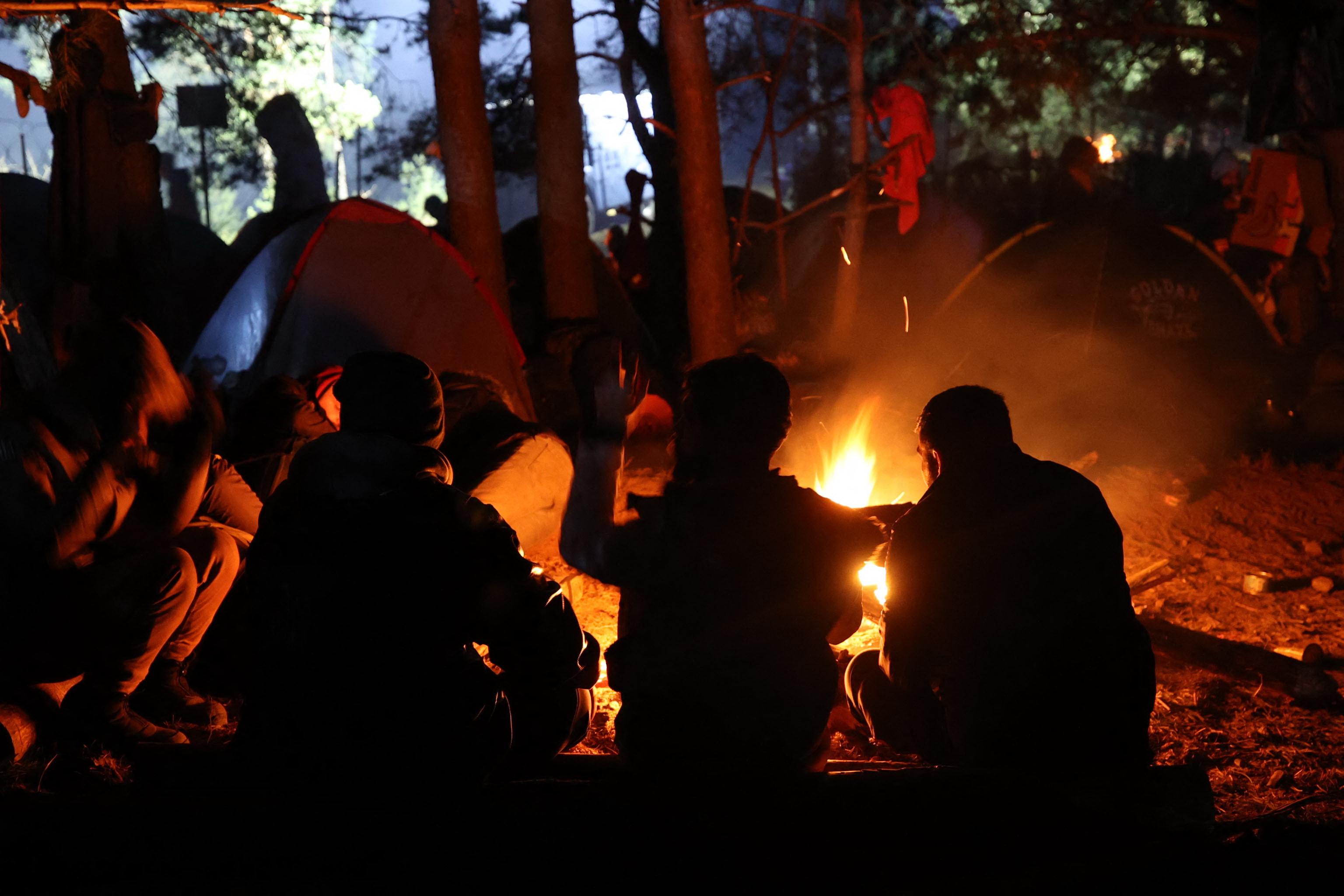
A group of migrants rest by a fire at a camp near the Belarusian-Polish border in the Grodno region on November 13, 2021. - Thousands of migrants -- most of them from the Middle East -- have crossed or attempted to cross the EU and NATO border since the summer. Western countries have accused the Belarusian regime, which is backed by Russia, of engineering the crisis in retaliation against EU sanctions, charges that Minsk has denied. (Photo by Leonid SHCHEGLOV / BELTA / AFP) / Belarus OUT LEONID SHCHEGLOV
Minsk. El jefe de la diplomacia europea y el ministro bielorruso de Relaciones Exteriores se reunieron este domingo por primera vez para abordar la crisis migratoria, la víspera de una reunión de la Unión Europea (UE) para ampliar las sanciones contra Minsk. Josep Borrell señaló que habló por teléfono con el ministro Vladimir Makei de “la situación humanitaria precaria” en la frontera entre Bielorrusia y Polonia, que supone el límite oriental de la UE.
“La situación actual es inaceptable y tiene que cesar. Las personas no tienen que ser utilizadas como armas”, afirmó Borrell en un tuit. Según la declaración bielorrusa sobre esta conversación, Makei insistió en que las sanciones contra Minsk son “inútiles” y “contraproducentes”.
Miles de migrantes procedentes de Oriente Medio acampan en la frontera entre la UE y Bielorrusia, lo que ha provocado un endurecimiento de las relaciones entre el bloque y Estados Unidos por un lado y Bielorrusia y su aliada Rusia por otro.
Los occidentales acusan al régimen de Alexander Lukashenko de organizar deliberadamente esta crisis, alentando a migrantes a dirigirse a este país y luego trasladarlos hasta la frontera con Polonia. Bielorrusia rechaza esta acusación y culpa a Occidente. El presidente ruso, Vladimir Putin, también niega los hecho y exhorta a Bruselas a hablar directamente con Minsk.
Un grupo de migrantes descansa junto a una fogata en un campamento cerca de la frontera entre Bielorrusia y Polonia, en la región de Grodno, el 13 de noviembre del 2021. (LEONID SHCHEGLOV/AFP)
Migrantes detenidos
Copiado!
El domingo, Polonia informó de que había detenido a decenas de migrantes procedentes de Bielorrusia y alertó de un posible intento masivo para cruzar la frontera. La Policía indicó en Twitter que 50 migrantes franquearon el sábado la frontera custodiada por fuerzas de la UE y la OTAN, cerca del poblado de Starzyna.
Todos fueron detenidos prácticamente enseguida, señalaron guardias fronterizos. De acuerdo a organizaciones humanitarias, hasta ahora han muerto al menos 10 migrantes y las ONG alertan de que se la situación está derivando en una crisis humanitaria a medida que las temperaturas caen por debajo de 0 ºC e instan a una desescalada.
Medycy na Granicy (Médicos en la frontera), una organización caritativa polaca, anunció el domingo que suspendía sus operaciones después de que cinco autos utilizados por sus equipos fueron dañados por desconocidos. Esta asociación ya se encontró con trabas la semana pasada cuando alguien pinchó las ruedas de su ambulancia cuando el personal sanitario se encontraba con los migrantes en el bosque.
En el más grande de los campamentos, cerca del poblado bielorruso de Bruzgi, las autoridades calculan en 2.000 los migrantes y refugiados, incluidas mujeres embarazadas y niños, por lo que el gobierno bielorruso les brindan ayuda, como tiendas de campaña y calentadores, gesto que hace prever su presencia casi permanente en la frontera.
Polonia se niega a permitir a los migrantes ingresar a su territorio y acusa a Bielorrusia de impedirles retornar a sus lugares de origen. El ministro del Interior, Mariusz Kaminski, indicó el sábado que corre un rumor entre los migrantes de que Polonia les permitiría pasar el lunes y llegarían autobuses desde Alemania para recogerlos.
El gobierno polaco envió SMS a todos los móviles extranjeros a lo largo de la frontera, denunciando “¡una absoluta mentira sin sentido!”. “Aquellos que difunden estos rumores quieren alentar a los migrantes a asaltar la frontera, lo que puede provocar incidentes peligrosos”, advierte el texto.
Un grupo de migrantes es visto cerca de la frontera bielorruso– polaca, en la región de Grodno, el 14 de noviembre del 2021. (OKSANA MANCHUK/AFP)
‘Lukashenko se equivoca’
Copiado!
Los ministros de Exteriores de la UE se reunirán este lunes para ampliar las sanciones contra Bielorrusia, tras las impuestas por la represión a los opositores al régimen de Lukashenko, quien gobierna al país desde hace casi 30 años.
Borrell afirmó que se decidirán sanciones contra “todos aquellos involucrados en el tráfico ilegal de migrantes a Bielorrusia, incluidas aerolíneas, agencias de viajes y funcionarios gubernamentales “Lukashenko se equivoca, cree que tomando represalias daríamos el brazo a torcer y se eliminarían las sanciones. Ocurre todo lo contrario”, declaró a la publicación francesa Journal du Dimanche.
De acuerdo al primer ministro polaco, Mateusz Morawiecki, entre las medidas previstas se encuentra “el cierre total de la frontera, para cortarle al régimen las ventajas económicas”. En una entrevista a la agencia PAP, Morawiecki también indicó que “toda la comunidad (europea) debe contribuir” para levantar un muro en la frontera entre Polonia y Bielorrusia.
Por presión de diplomáticos europeos, Turquía ha prohibido a iraquíes, sirios y yemeníes dirigirse hacia Bielorrusia, y la aerolínea siria Cham Wings anuló sus vuelos hacia Minsk.