“Después de 60 años de vuelos espaciales, nos acercamos a la cifra de 6.000 reentradas incontroladas de grandes objetos (en la Tierra), en su mayoría satélites y partes superiores” de cohetes, dijo a la AFP.
Más del 90% de estos residuos pesaban 100 kilos o más.
“Solamente en una ocasión un fragmento impactó a una persona, sin herirla”, señaló Stijn Lemmens, especialista en residuos de la Agencia Espacial Europea basado en Darmstadt, Alemania.
El experto calculó las posibilidades de ser alcanzado por residuos espaciales en una en 1,2 billones, 10 millones de veces menos que de recibir el impacto de un rayo.
Misión desde el 2011
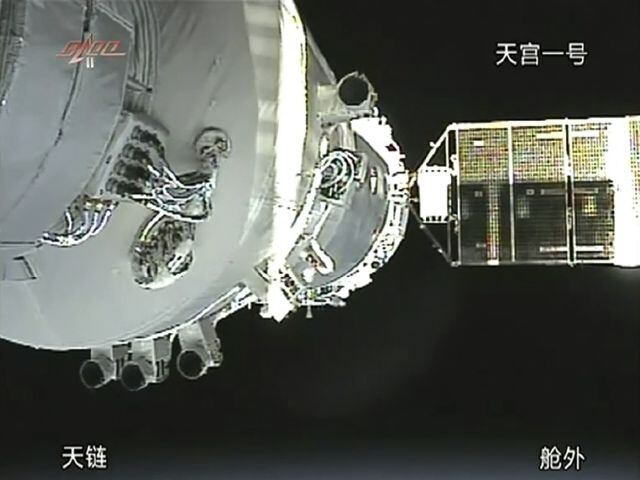
El Programa Espacial de China, que lanzó el Tiangong-1 (Palacio Celestial) en el 2011, apenas ha informado sobre la suerte de esta estación espacial, la primera del país capaz de albergar astronautas y diseñada con el fin de experimentar con tecnologías relacionadas con atracar en el espacio.
El programa publica diariamente en su página web oficial su trayectoria descendiente, y su altitud media el martes era de 207,7 km.
La agencia de noticias estatal Xinhua dijo el lunes, citando a la agencia espacial china, que el laboratorio “arderá por completo mientras ingresa en la atmósfera”.
Durante sus dos años de vida operativa, el Tiangong-1 participó en dos misiones con tripulación y una sin.
Como para todos los satélites y naves espaciales de gran tamaño, la estación había sido programada para una “reentrada controlada” después de su vida útil, con una caída en el océano Pacífico, lejos de toda zona habitada.
Pero en marzo de 2016, la estación espacial “dejó de funcionar, aunque mantuvo su integridad estructural”, indicó la ESA.
“Se presume que el Tiangong-1 se desintegrará durante su reentrada atmosférica y que algunos fragmentos sobrevivirán al proceso y alcanzarán la superficie de la Tierra”, dijo la Agencia Espacial Europea.