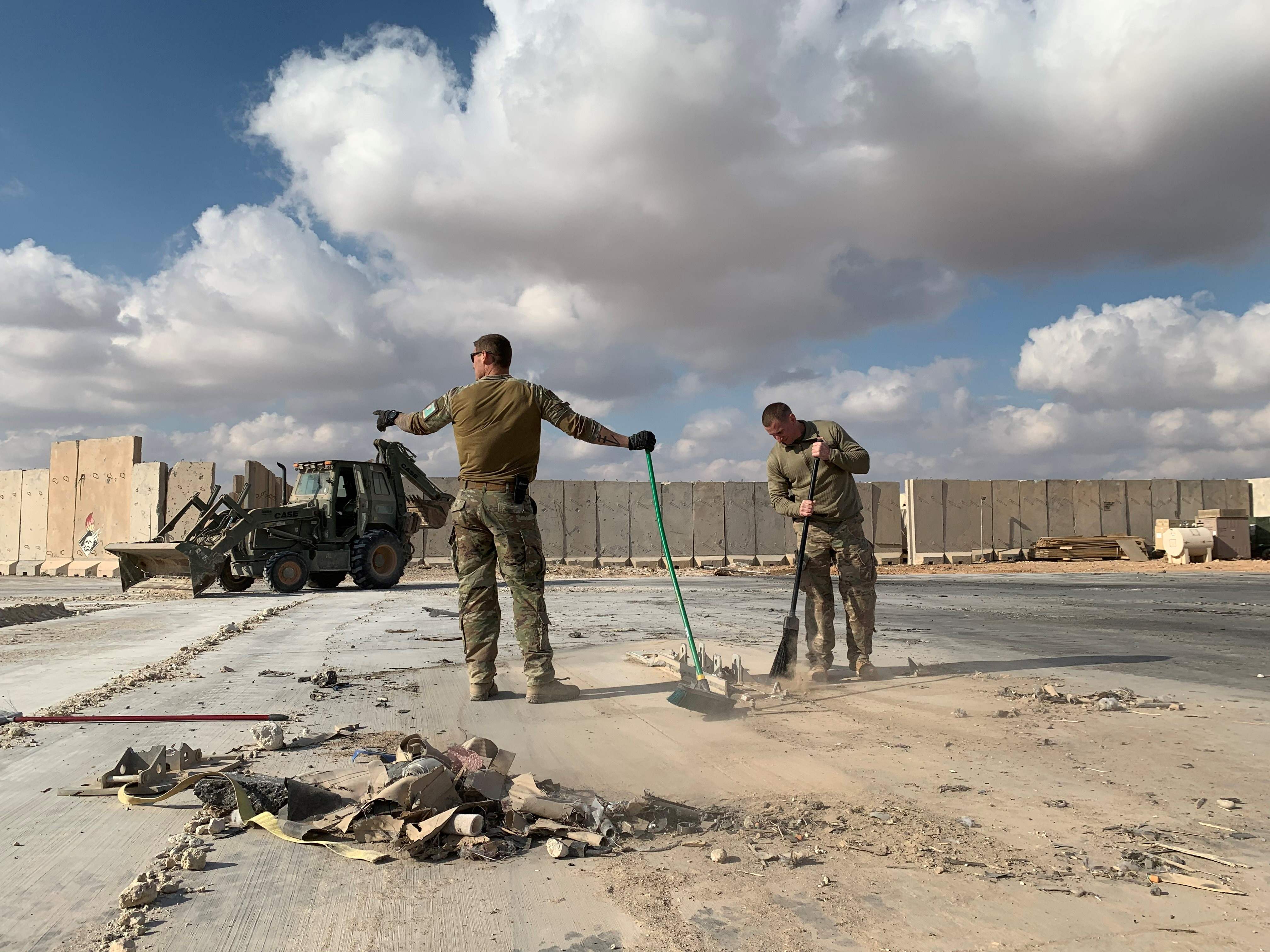
“34 efectivos en total han sido diagnosticados con conmociones cerebrales y TBI (lesión cerebral traumática)”, declaró el portavoz del Pentágono, Jonathan Hoffman, en una conferencia de prensa en el Pentágono.
Esa información echa por tierra las declaraciones iniciales del presidente Donald Trump de que ningún estadounidense resultó herido en el ataque a la base de Ain al Asad (oeste de Irak) durante la noche del 7 al 8 de enero. Sin embargo, posteriormente autoridades norteamericanas informaron de que 11 soldados resultaron heridos.
Hoffman detalló que 17 de las víctimas fueron trasladadas inicialmente a Alemania para recibir tratamiento, ocho de las cuales llegaron a Estados Unidos el viernes.
"Continuarán recibiendo tratamiento en Estados Unidos, ya sea en Walter Reed (un hospital militar cerca de Washington) o en sus respectivas bases", señaló.
Las otras nueve víctimas que fueron trasladadas a Alemania "todavía están siendo evaluadas y tratadas allí", agregó.
Entre los síntomas experimentados por los soldados, citó "dolores de cabeza, mareos, hipersensibilidad a la luz, agitación y náuseas". Estos síntomas desaparecieron rápidamente en algunos casos, pero para los demás, empeoraron y los soldados fueron evacuados.
Trump: ningún estadounidense murió en ataques a bases militares
Durante la noche del 7 al 8 de enero, Teherán lanzó misiles contra las bases de Ain al Assad (oeste) y Erbil (norte), donde están desplegados parte de los 5.200 soldados estadounidenses.
El ataque fue en represalia por el asesinato del más alto general iraní Qasem Soleimani, muerto en un ataque con drones el 3 de enero cerca de la capital de Irak, Bagdad.
Legisladores demócratas acusaron a Trump de mentir sobre el ataque. “Aunque minimiza estas lesiones como ‘dolores de cabeza’, aproximadamente la mitad de todas las lesiones cerebrales traumáticas (TBI) requieren cirugía y pueden provocar discapacidades de por vida”, afirmó la congresista Debbie Wasserman Schultz de Florida.
El senador de Rhode Island, Jack Reed, miembro de mayor rango del Comité de Servicios Armados, calificó al TBI como "un asunto serio".
“No es un ‘dolor de cabeza’, y es completamente incorrecto que el presidente Trump disminuya sus heridas... Les debe una disculpa” a los soldados, consideró Reed.
En un mitin de campaña en Nuevo Hampshire, el exvicepresidente Joe Biden, uno de los principales candidatos para desafiar a Trump en las elecciones de este año, también afirmó que el presidente había minimizado las heridas de las tropas. “Lo encuentro, francamente, desagradable”, añadió.